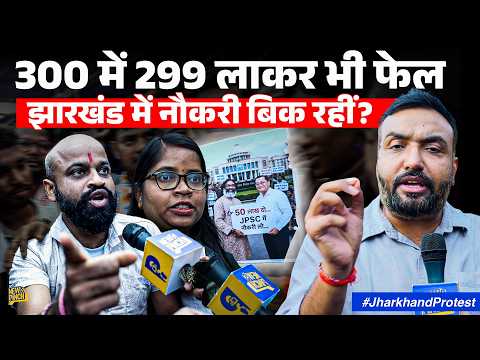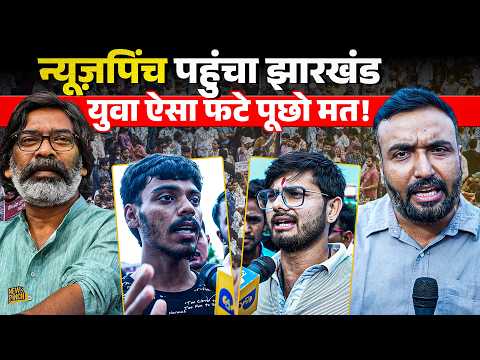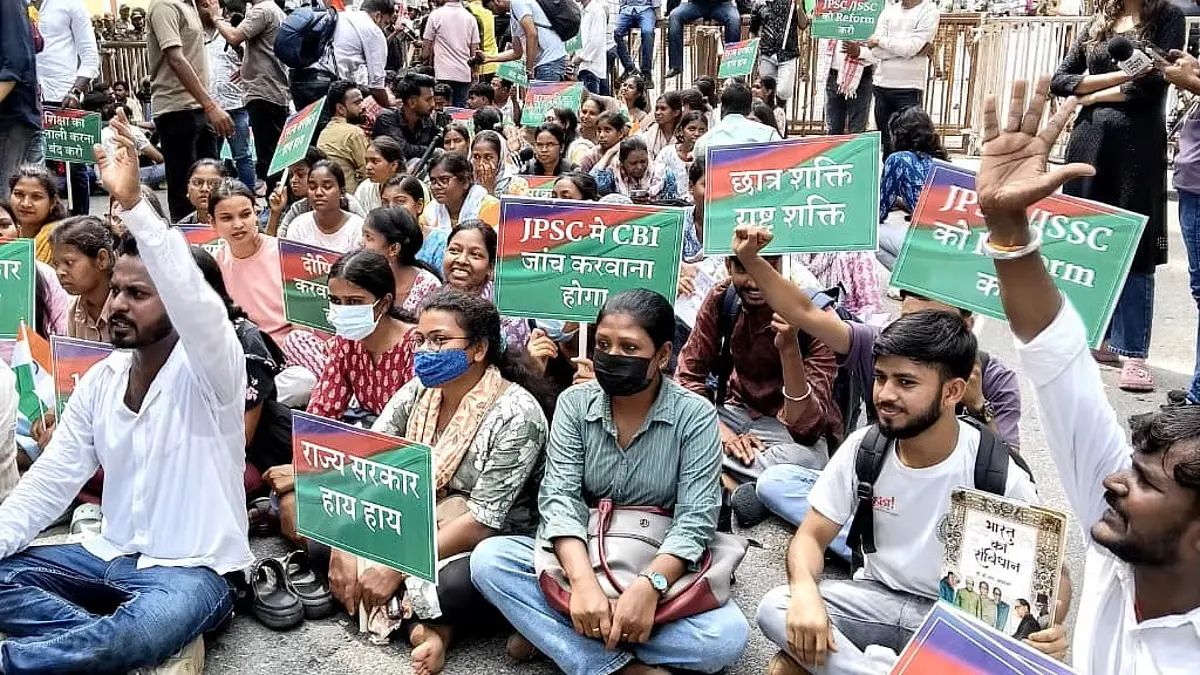
A carbon-copy answer sheet, leaked online in early July 2026, showed a Jharkhand Public Service Commission candidate had advanced to the next round of the state’s 14th Combined Civil Services exam despite getting fewer than half his answers right on paper one. What followed was a chairman’s resignation, eleven arrests, nine postponed exams, and by early August, thousands of aspirants camped indefinitely at Ranchi’s Jaipal Singh Munda Stadium, in a protest its own participants describe as modelled directly on the Cockroach Janta Party’s Jantar Mantar sit-in.
A viral answer sheet, and a resignation under pressure
The 14th JPSC Preliminary Examination results, declared 2 July, triggered the controversy almost immediately once Suman Saurav’s OMR sheet began circulating: he had qualified despite answering only 48 of 100 questions correctly. Jharkhand’s CID raided JPSC Chairman L. Khiangte’s residence on 21 July; he resigned the same day, describing it as a voluntary step to let the investigation proceed impartially. An FIR followed on 22 July, and arrests, eventually reaching 11 people including Saurav, continued through the rest of the month. Nine separate recruitment examinations run by JPSC and JSSC were ultimately postponed as the scope of the alleged irregularities widened, leaving thousands of aspirants’ futures on hold.
Jantar Mantar’s own students, one state over
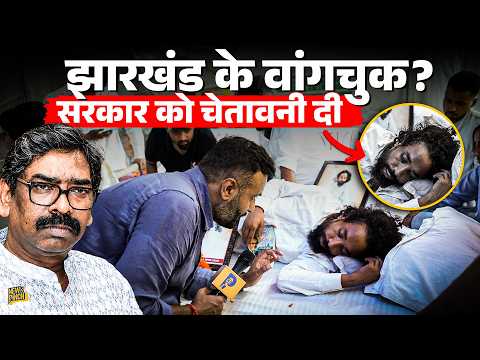
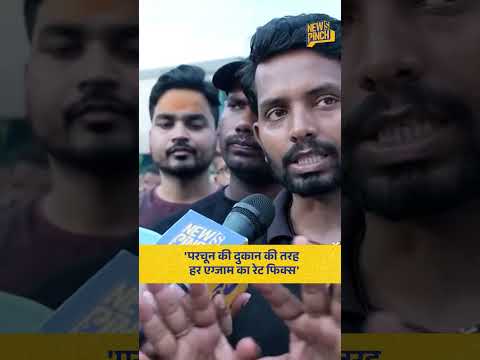
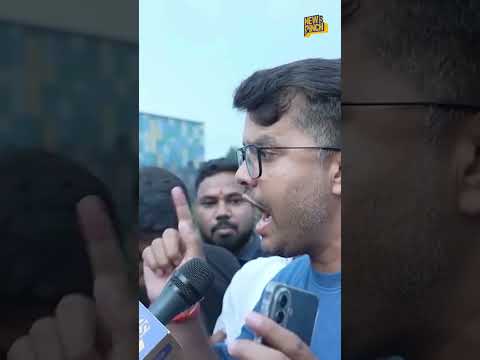
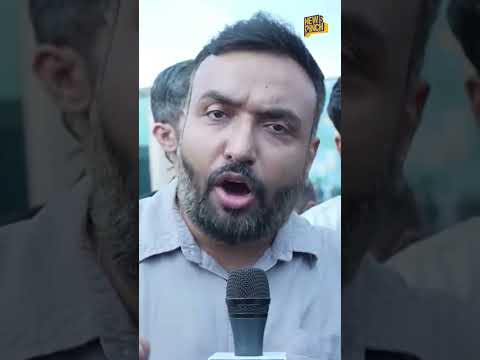
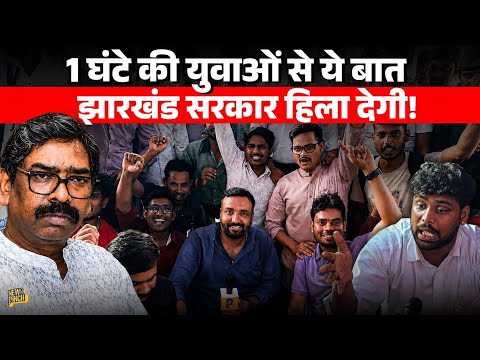
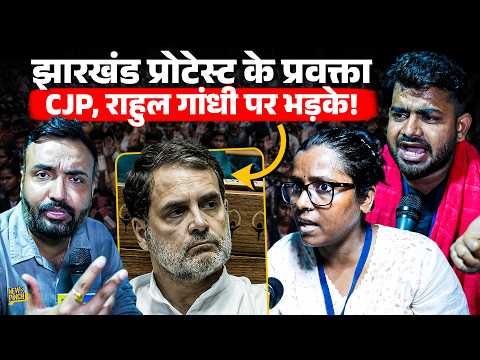
The protesters who built the sit-in at Jaipal Singh Munda Stadium say the connection to Delhi isn’t incidental. “The success of the CJP-led protests in Delhi has given us the confidence that accountability can be sought,” protester Vinay Mehta told reporters as the camp grew. The Jharkhand Loktantrik Krantikari Morcha (JLKM), the regional party where JSSU leader Devendra Nath Mahto also serves as vice-president, set up its own stage alongside the protest, but the students’ core organising committee has kept political leadership at arm’s length, a deliberate echo of how CJP’s own founders tried to keep NEET’s protest from being captured by any single party. On 2 August, Mahto began an indefinite hunger strike, prompting comparisons to Sonam Wangchuk, whose own fast at Jantar Mantar had ended barely a week earlier. On 3 August, CJP founder Abhijeet Dipke made the link explicit, posting that “the CJP stands with all the students in Jharkhand and supports their demands.”
Foreign hand for one government’s protesters, moral support for the other’s
During the Jantar Mantar sit-in, a Delhi High Court PIL filed by Satish Kumar Aggarwal, a former vice-president of the Akhil Bharat Hindu Mahasabha, alleged the CJP agitation involved “foreign-funded organisations” and pointed to Sonam Wangchuk’s own past ties to foreign-linked institutions. Separately, the RSS-affiliated Organiser magazine ran a series of stories built around a Dubai-based Malayali businessman, Mohammed Shaji of Abreco Freight, who had paid to fly 23 of his employees to Delhi to join the protest; one headline framed it as an attempt “to destabilize Bharat,” and a complaint over the trip was filed with the Ministry of Home Affairs. At an MEA press briefing on 25 July, asked directly about claims of foreign or Pakistani backing for the protest, spokesperson Randhir Jaiswal gave a carefully noncommittal answer: “I have no information to share on this matter.” That statement was neither a confirmation nor a denial, and the Ministry separately had to correct social media posts that it said misrepresented what Jaiswal had actually said.
No comparable “foreign hand” framing has attached itself to the Jharkhand protest, which uses the same tactics (an indefinite camp, a hunger strike, a demand for a CBI probe) against a state government run by the opposition JMM rather than the BJP-led centre. If anything, the opposite has happened: BJP MPs staged their own solidarity dharna outside Parliament on 31 July, and on 4 August, sitting BJP Chief Minister of Assam Himanta Biswa Sarma publicly called it “this just movement,” urging Jharkhand’s government to meet the students’ demands. The same protest playbook, credibly alleged corruption, a hunger strike, an appeal to CBI, drew suspicion and a foreign-funding narrative when aimed at Delhi, and moral support from ruling-party leaders when aimed at Ranchi. Readers can judge for themselves what explains the difference, but this site was not able to find any similarly reported “foreign-funded” allegation made against the Jharkhand protesters themselves.
The government’s answer, and what protesters make of it
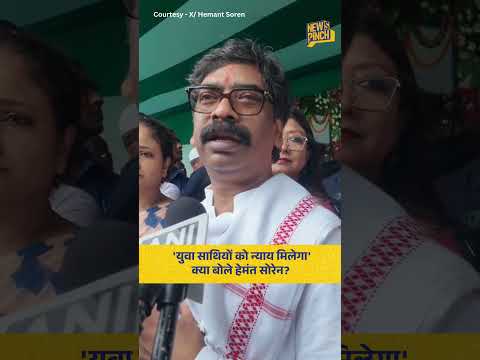
Hemant Soren ordered a CID probe rather than the CBI investigation protesters were demanding, an answer JPSC aspirant Rahul Kumar Kranti dismissed on record: “We have completely lost faith in the ongoing CID probe.” JMM leader Manoj Pandey said on 3 August that the state government would not spare anyone found guilty, but argued the state’s own agencies, not central ones, should run the investigation. Soren’s own first public statement came only on 4 August, more than a week after the sit-in scaled up: “Our young people will certainly get justice within the ambit of the Constitution and the law.” As of this page’s last update, the CBI/ED probe protesters are demanding has not been ordered, and the 14th JPSC Prelims has not been cancelled.
Day 17: batons, barricades, and an arrest
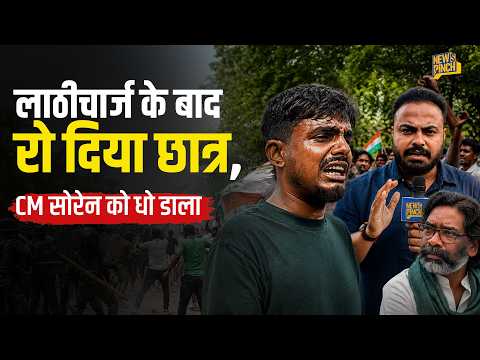
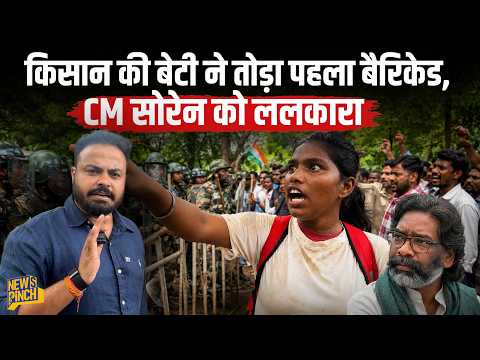
Ten days after Assam’s chief minister called the protest “just,” the standoff turned physical. On 10 August, the sit-in’s 17th day and Chief Minister Hemant Soren’s 51st birthday, thousands of protesters set out around 10:30 am from the old Assembly building on a gherao march toward the new Assembly Complex, breaking through one police barricade after another. Officers met them with lathicharge, tear gas and water cannon near the final barricade by Jagannathpur Temple. “It was barbaric,” one student told reporters, alleging police struck protesters on their heads, arms and faces; Devendra Nath Mahto, still on his hunger strike, joined the march himself. State minister Sudivya Kumar Sonu said the government had already accepted “98 per cent” of the aspirants’ demands but could not cancel the JSSC-CGL exam because it was under High Court and Supreme Court supervision, an answer protest leaders rejected outright. Soren said action would follow soon and offered talks with student representatives, and JMM general secretary Vinod Pandey said the party would set up a high-level committee to take up the demands.
The same day, Jharkhand’s CID arrested former JPSC chairman L. Khiangte, three weeks after his 21 July resignation, following what investigators described as more than 30 hours of interrogation across four sessions. The CID alleges Khiangte took roughly ₹2 crore in bribes from TSR Data Processing Pvt Ltd (TDPL), a Lucknow-based exam-conduct agency that JSSC had itself blacklisted in May 2025, in exchange for awarding it a contract by nomination rather than open tender; TDPL’s marketing manager Abhay Tiwari, arrested earlier in the case, told investigators Khiangte’s cut came to about 20 percent of the contract’s value. Hours later, the Enforcement Directorate opened its own money-laundering investigation under the Prevention of Money Laundering Act, citing the CID’s FIR and other complaints, with the JSSC-CGL exam among those under scrutiny.
Where things stand
The sit-in at Jaipal Singh Munda Stadium is ongoing, with Devendra Nath Mahto’s hunger strike continuing even as he joined the 10 August march to the Assembly. Two central agencies (the CID and now the ED) and a former commission chairman’s arrest have not, as of this page’s last update, produced the CBI probe or the exam cancellation protesters are demanding. This page will update as the protest develops; see the video section below for on-ground footage meeting this site’s verification standard.